
Dryer Repair
Why Is My Dryer Taking Too Long to Dry? 8 Causes to Check
Long drying times usually point to restricted airflow, load conditions, weak heating, or moisture-sensing problems. Learn what you can check and when service is needed.
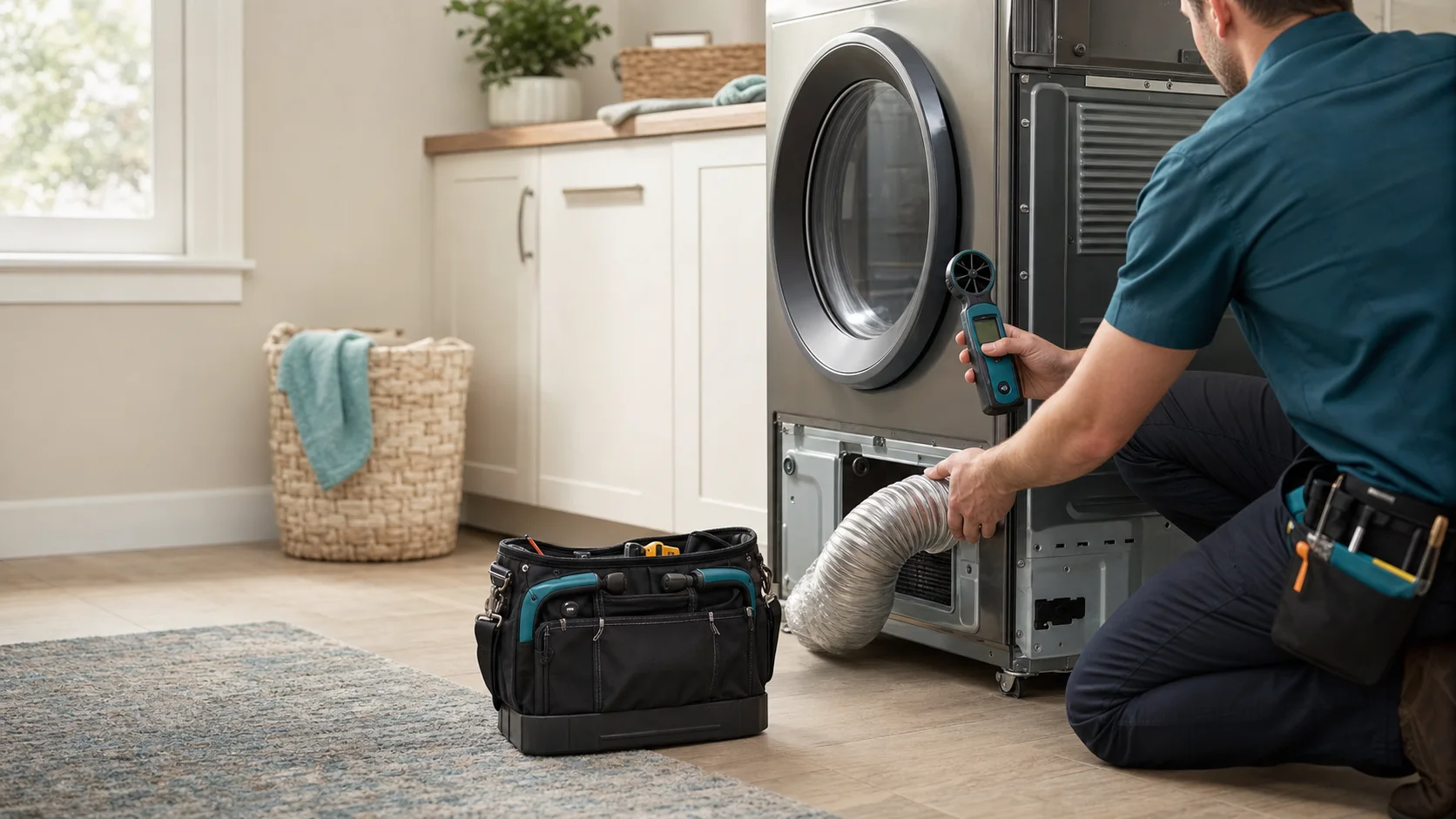
A dryer that takes too long to dry clothes is often signaling an airflow problem, not simply a worn heating element. The machine needs heat, tumbling, and a clear path for moist air to leave the drum. If any one of those conditions is weak, cycles become longer and energy use can increase.
If a dryer feels unusually hot while clothes remain damp, stop running repeated cycles and check the lint screen and exhaust path first.
Quick checks before scheduling dryer service
Start with the parts of the drying process you can inspect without opening the cabinet.
- Clean the lint screen before the next load, even if the previous load produced little visible lint.
- Confirm that the selected cycle matches the fabric and load size.
- Separate heavy towels from lightweight garments.
- Make sure the washer completes a strong final spin and clothes are not entering the dryer saturated.
- While the dryer runs, check whether the exterior vent hood opens and releases a steady stream of air.
Stop using the dryer if you smell burning, see smoke, hear severe scraping, notice a damaged power cord, or find the plug or receptacle overheating. These conditions need prompt professional attention.
8 reasons a dryer takes too long to dry
1. The lint screen is restricted
A lint screen can look clean while fine residue from fabric products reduces airflow through the mesh. Remove visible lint after every load. If the manufacturer permits washing, clean and dry the screen according to the owner's guide. Never operate the dryer without the correct lint filter installed.
2. The exhaust vent is crushed, kinked, or clogged
Moist air must travel from the dryer through the transition duct and household exhaust. A crushed duct behind the appliance, excessive duct length, lint accumulation, or a stuck exterior flap can slow that flow. The dryer may heat normally at first but need multiple cycles because humidity remains in the drum.
Do not reach into concealed ductwork with improvised tools. A proper inspection considers the full vent route and uses materials suitable for dryer exhaust. Plastic or thin foil transition products may not meet the appliance manufacturer's installation requirements.
3. The load is too large or mixed unevenly
A tightly packed drum cannot lift and separate clothing effectively. Large items can also wrap around smaller pieces and trap moisture. Dry similar fabrics together, leave room for tumbling, and use the load guidance provided for the model. One very small load can also confuse some automatic cycles because items may not contact the moisture sensors consistently.
4. Clothes are too wet after the washer cycle
The dryer may be working correctly while the washer leaves excess water in the load. An unbalanced wash, low spin selection, drain restriction, or washer fault can create this symptom. Compare how wet clothing feels at the end of the wash and test an appropriate spin cycle before assuming the dryer is responsible.
5. The heating system is weak or intermittent
Electric dryers may have a failed heating element section, open thermal component, wiring issue, or power-supply problem. Gas dryers may have ignition, sensor, valve-coil, burner, or gas-supply concerns. A dryer can tumble with little or no usable heat, so drum movement alone does not confirm normal operation.
6. Moisture sensors are coated or not reading the load
Automatic cycles rely on sensor bars or other sensing strategies to estimate dryness. Residue, wiring problems, or a control issue can end a cycle too soon or extend it unnecessarily. Clean only as instructed by the manufacturer and compare automatic performance with a correctly selected timed cycle.
7. Internal airflow is blocked
Lint can collect beyond the removable filter, and internal components such as a blower wheel, housing, seal, or duct can fail. A loose blower wheel may turn inconsistently even though the motor runs. Internal access involves sharp metal edges, moving parts, heat, gas or high voltage, so cabinet diagnosis should be performed by a qualified technician.
8. The thermostat, thermistor, or control is cycling incorrectly
The control system regulates heat based on temperature and cycle information. An inaccurate sensor or control fault may produce short heat periods, excessive cooldown, or erratic cycle time. Correct diagnosis compares actual temperature behavior with airflow and electrical test results.
What the dryer symptoms can tell you
| Symptom | Likely areas to inspect |
|---|---|
| Dryer is hot but clothes stay damp | Lint screen, transition duct, exterior vent, and internal airflow |
| Drum turns but there is little or no heat | Supply, heating or ignition system, safety components, and controls |
| Timed dry works better than sensor dry | Load size, moisture sensors, sensor wiring, and cycle control |
| Cycles became longer gradually | Vent restriction, lint buildup, blower performance, and washer spin |
| Dryer stops before clothes are dry | Airflow, overheating protection, motor, sensors, and controls |
Why airflow should be checked before replacing parts
Restricted airflow changes temperatures throughout the dryer. That can make a thermostat or safety device appear to be the main problem when it is responding to abnormal heat. Replacing a component without correcting the restriction can leave the original long-dry symptom in place and may cause the replacement to fail again.
A complete dryer diagnosis evaluates exhaust flow, heat production, drum movement, sensor response, and the condition of the model-specific safety circuit. For recurring long cycles, APEX can provide dryer repair in Greater Cleveland and explain the test results before the repair decision.
How to reduce drying time safely
- Clean the lint screen before each load.
- Keep the transition duct from being crushed when the dryer is moved back.
- Have the complete exhaust system inspected and cleaned at an appropriate interval for its use and layout.
- Use the washer's suitable high-spin setting for towels and other absorbent items.
- Choose a cycle designed for the fabric instead of adding time automatically.
- Arrange service when drying time changes suddenly or the machine begins overheating.
When to call for professional dryer repair
Book service when the exterior airflow is weak, the dryer has no reliable heat, cycles stop unexpectedly, unusual sounds begin, or safe external checks do not improve performance. A technician should also inspect the machine if a safety component has opened; that part may be evidence of another airflow or heating failure.
APEX Appliance Repair serves communities throughout our established service area. See recent completed repair jobs or schedule dryer service online when you are ready for model-specific diagnosis.
COMMON QUESTIONS
Frequently asked questions
Why does my dryer get hot but take two cycles to dry?
Heat without effective drying commonly points to restricted airflow, an overloaded or mixed load, or clothes entering the dryer too wet. Check the lint screen, transition duct, exterior vent airflow, and washer spin result first.
Can a clogged dryer vent make drying take longer?
Yes. A restricted exhaust path holds moist air in the drum and can raise internal temperatures. The complete route from the dryer connection to the exterior termination should be evaluated, not only the short duct behind the machine.
Why does timed dry work but sensor dry does not?
The load may not contact the moisture sensors consistently, the sensor bars may have residue, or the sensing circuit or control may need diagnosis. Compare cycles with a normal mixed load and follow the manufacturer cleaning instructions.
Should I keep using a dryer that takes too long?
Do not continue repeated cycles if the dryer is unusually hot, smells burned, has weak exhaust airflow, or shows electrical damage. Even without those signs, a persistent increase in drying time should be diagnosed so the airflow and heating systems can be checked.
LOCAL APPLIANCE HELP
Still dealing with this appliance problem?
APEX Appliance Repair serves Greater Cleveland with practical diagnostics and clear repair recommendations.
Continue reading
Related appliance advice
Commercial Ice Machine Not Making Ice? Production and Harvest Checks
Learn what can cause commercial ice machine not making ice, which checks are safe, what symptoms matter, and when professional diagnosis is the right next step.
Read article
Commercial Refrigerator Not Holding Temperature: First Checks and Risks
Learn what can cause commercial refrigerator not cooling, which checks are safe, what symptoms matter, and when professional diagnosis is the right next step.
Read article