
Residential Ranges & Ovens
Gas Oven Not Heating or Igniting? Safe Checks and Repair Signs
Learn what can cause gas oven not heating, which checks are safe, what symptoms matter, and when professional diagnosis is the right next step.
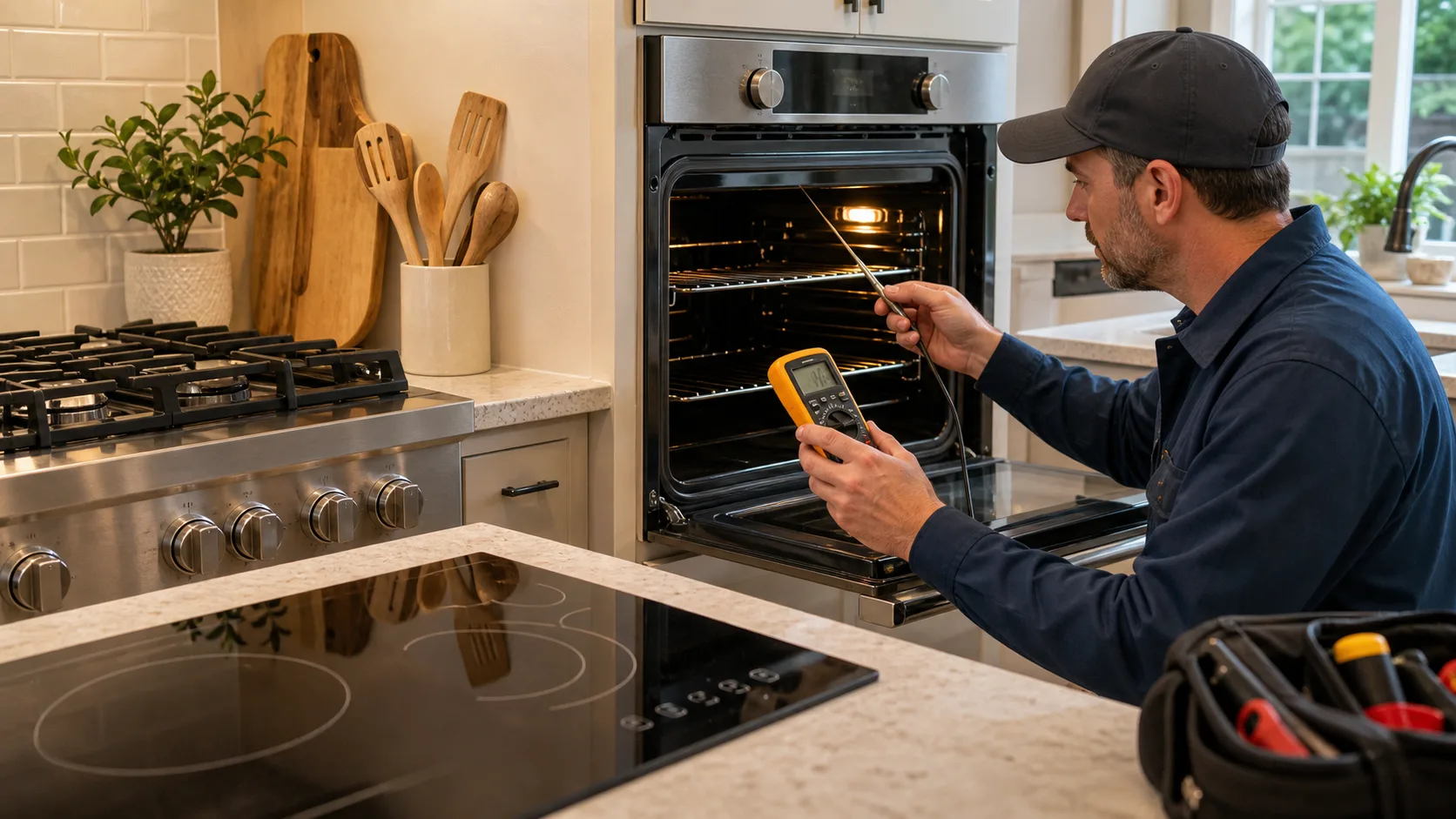
Searching for gas oven not heating usually means the range, oven or cooktop has changed in a way that is affecting safety, food, comfort, or daily operations. The useful next step is not guessing a part; it is separating a simple operating condition from a fault that needs instruments and model-specific testing.
Compare the selected setting with actual behavior and note whether the unit never reaches temperature or cannot hold it. Stop for a gas odor, sparking, damaged wiring or a breaker that repeatedly trips.
Quick answer: what this symptom usually means
For gas oven not heating, the diagnostic path commonly includes power or gas supply, elements or igniter, temperature sensor, switches, wiring and control. More than one system can create the same outward behavior on a range, oven or cooktop, so document when the change began, what still works, any display code, and whether the condition is constant or intermittent before drawing a conclusion.
Safe checks you can make first
- For gas oven not heating, confirm the range, oven or cooktop setting, cycle, or operating mode in the owner’s manual.
- Check the range, oven or cooktop outlet, breaker, and accessible utility shutoffs without removing a service panel.
- Look around the range, oven or cooktop for blocked vents, pinched hoses, incomplete closure, unusual frost, water, or residue.
- Listen during the reported temperature or heating problem and note when a fan, pump, motor, burner, or compressor sound changes.
- Photograph any code connected with gas oven not heating and record the model number before requesting service.
These gas oven not heating observations are useful for homes across Cleveland and the surrounding Northeast Ohio suburbs. Northeast Ohio’s seasonal temperature and humidity changes can expose marginal seals, drainage, and ventilation on a range, oven or cooktop, but weather alone is not a diagnosis.
Related symptoms that help narrow the cause
- gas oven won't ignite
- signs of a bad oven igniter
When reporting gas oven not heating, describe the complete range, oven or cooktop pattern rather than only the headline symptom. Temperature plus frost points toward different checks than temperature plus clicking, while water during fill calls for a different path than water after a defrost or drain cycle.
Common causes professionals evaluate
1. Utility Supply And Settings
For a range, oven or cooktop showing gas oven not heating, the utility supply and settings is one area that may need to be checked. The reported temperature or heating problem does not identify that area by itself. Diagnosis starts with operating conditions, follows the model’s sequence, and compares observations or measurements with service information before a repair is proposed.
2. Airflow, Burner Or Heating Element
For a range, oven or cooktop showing gas oven not heating, the airflow, burner or heating element is one area that may need to be checked. The reported temperature or heating problem does not identify that area by itself. Diagnosis starts with operating conditions, follows the model’s sequence, and compares observations or measurements with service information before a repair is proposed.
3. Igniter, Thermostat Or Temperature Sensor
For a range, oven or cooktop showing gas oven not heating, the igniter, thermostat or temperature sensor is one area that may need to be checked. The reported temperature or heating problem does not identify that area by itself. Diagnosis starts with operating conditions, follows the model’s sequence, and compares observations or measurements with service information before a repair is proposed.
4. Door Seal And Heat Loss
For a range, oven or cooktop showing gas oven not heating, the door seal and heat loss is one area that may need to be checked. The reported temperature or heating problem does not identify that area by itself. Diagnosis starts with operating conditions, follows the model’s sequence, and compares observations or measurements with service information before a repair is proposed.
5. Wiring, Control Or Refrigeration System
For a range, oven or cooktop showing gas oven not heating, the wiring, control or refrigeration system is one area that may need to be checked. The reported temperature or heating problem does not identify that area by itself. Diagnosis starts with operating conditions, follows the model’s sequence, and compares observations or measurements with service information before a repair is proposed.
Symptom-to-diagnosis table
| What you observe | What should be checked | Recommended next step |
|---|---|---|
| gas oven not heating began after a setting, cleaning, or installation change | range, oven or cooktop configuration, connections, clearances, and operating mode | Restore the documented setup and monitor one normal cycle |
| The range, oven or cooktop declined gradually before gas oven not heating | Airflow, scale, filters, seals, drainage, and mechanical wear | Complete safe maintenance; schedule diagnosis if performance stays weak |
| The range, oven or cooktop starts, stops, or cycles repeatedly | Supply, sensors, thermal protection, motor or compressor load, and control | Avoid repeated resets and arrange model-specific diagnosis |
| gas oven not heating appears with water, heavy frost, overheating, or a new odor | Leak path, defrost or heat system, wiring, and safety devices | Stop use when there is an electrical, fuel, burn, or food-safety risk |
| The gas oven not heating symptom returns after a temporary reset | Stored fault data and the complete range, oven or cooktop operating sequence | Use the recurrence as evidence; do not continue power cycling |
When to stop DIY troubleshooting
Internal testing for gas oven not heating can expose live voltage, gas, hot water or steam, sharp sheet metal, moving parts, refrigerant, stored electrical energy, or pressurized systems inside the range, oven or cooktop. Stop and arrange qualified service for fuel odor, arcing, smoke, a burning smell, exposed wiring, repeated breaker trips, uncontrolled temperature, leaking near electrical parts, or suspected refrigerant damage.
Stop for a gas odor, sparking, damaged wiring or a breaker that repeatedly trips. For gas oven not heating, a commercial operator should follow the facility’s food-safety and lockout/tagout procedures. In a home, keep children and pets away from an unplugged or partially disassembled range, oven or cooktop.
How a professional diagnosis should proceed
- Verify gas oven not heating under the conditions in which it occurs on the range, oven or cooktop.
- Inspect the range, oven or cooktop installation, utility supply, airflow, water, and drain conditions.
- Read stored range, oven or cooktop faults and compare sensor values with actual conditions.
- Test the load, safety circuit, and control output connected with the reported temperature or heating problem.
- Explain the evidence and range, oven or cooktop repair scope before installing parts.
For gas oven not heating, this order matters because a range, oven or cooktop control may be reacting correctly to a failed sensor, restricted path, or overloaded component. The most expensive part is not automatically the cause, and a reset that briefly restores operation does not prove that the fault is gone.
Repair or replace: the practical decision
With a range, oven or cooktop showing gas oven not heating, compare the confirmed fault with overall condition, maintenance history, age, parts availability, and the consequence of another interruption. A commercial decision also includes downtime and product risk; a household decision should compare repair scope with cabinet condition and needed performance, not a broad age rule alone.
Local service for this appliance problem
If the external checks do not resolve gas oven not heating, review APEX’s Gas Range Repair page or book a diagnostic visit. Availability for a range, oven or cooktop at a specific ZIP code is confirmed against the established Greater Cleveland service area. Recent repair examples show how symptom-based findings are documented.
Sources and further reading
For gas oven not heating, use the range, oven or cooktop manufacturer’s owner information for model-specific settings, cleaning, and safety instructions. Topic research also referenced:
COMMON QUESTIONS
Frequently asked questions
What should I check first for gas oven not heating?
For gas oven not heating, confirm the range, oven or cooktop settings, power or utility supply, closure, and accessible airflow, water, drain, or exhaust conditions. Record sounds and codes without removing service panels.
Can I keep using the range, oven or cooktop with this symptom?
When gas oven not heating is accompanied by gas odor, smoke, arcing, a burning smell, repeated breaker trips, uncontrolled heat, leaking near electrical parts, or a food-safety concern, stop using the range, oven or cooktop. Otherwise, limit use until the cause is understood.
Which systems can cause this problem?
For gas oven not heating on a range, oven or cooktop, diagnosis may include power or gas supply, elements or igniter, temperature sensor, switches, wiring and control. The symptom alone does not identify one failed part with certainty.
Is this appliance worth repairing?
A repair decision for a range, oven or cooktop with gas oven not heating depends on the confirmed failure, overall condition, age, parts availability, repair scope, and impact of another interruption.
Gas oven won't ignite — is it related?
It may be related to gas oven not heating because several range, oven or cooktop systems influence more than one symptom. Note whether both conditions begin at the same point in the cycle so the correct sequence can be tested.
LOCAL APPLIANCE HELP
Still dealing with this appliance problem?
APEX Appliance Repair serves Greater Cleveland with practical diagnostics and clear repair recommendations.
Continue reading
Related appliance advice
Electric Oven Not Heating or Heating Unevenly: What to Check
Learn what can cause electric oven not heating, which checks are safe, what symptoms matter, and when professional diagnosis is the right next step.
Read articleGas Stove Burner Won’t Light or Keeps Clicking: Causes and Safety Steps
Learn what can cause gas stove burner won't light, which checks are safe, what symptoms matter, and when professional diagnosis is the right next step.
Read article