
Refrigerator Repair
Refrigerator Not Cooling? 10 Common Causes and What to Check First
A refrigerator that runs but stays warm may have an airflow, frost, fan, control, or sealed-system problem. Use this practical checklist to narrow down the cause.
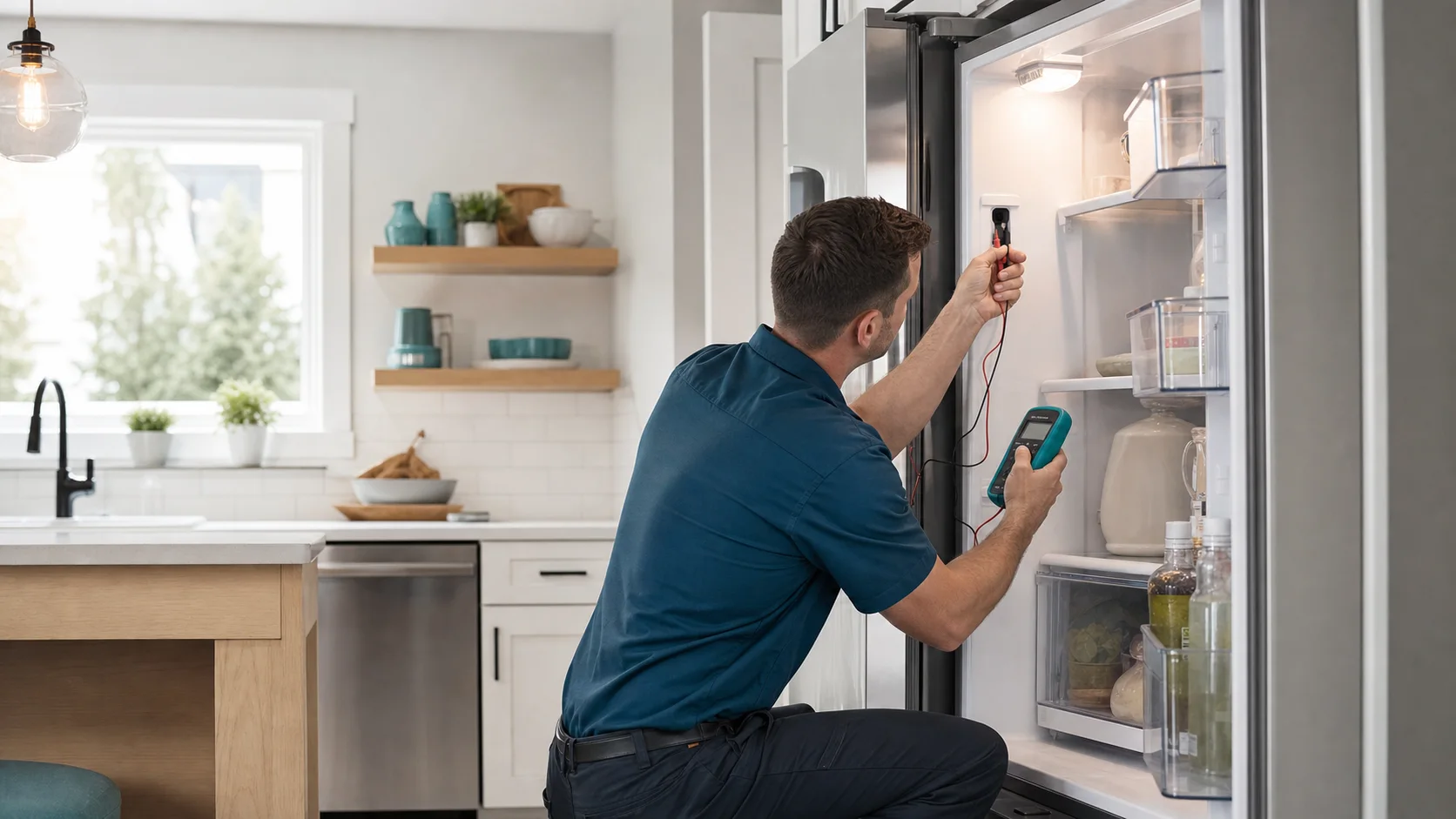
If your refrigerator is not cooling, start with the simple conditions that affect temperature and airflow before assuming the compressor has failed. A warm fresh-food section can be caused by a blocked vent, heavy frost, a fan problem, dirty condenser surfaces, a damaged door seal, or a control issue. The pattern of the symptoms usually provides the best clue.
A refrigerator that is completely silent needs a different diagnostic path from one that runs constantly but cannot reach the selected temperature.
What to check first when a refrigerator is not cooling
Before moving the appliance or removing any panel, confirm the basics. These checks do not require tools and can prevent an unnecessary service visit.
- Confirm that the interior lights and display work and that the plug is fully seated.
- Check that the cooling control was not changed accidentally or placed in demo or cooling-off mode.
- Make sure food packages are not holding a door open or blocking interior air vents.
- Listen for fans and compressor operation, then note whether the unit is silent, cycling, or running continuously.
- Look for heavy frost on the freezer's rear interior panel or water around the cabinet.
Keep the doors closed as much as possible while you investigate. If stored food may have warmed beyond a safe condition, follow current official food-safety guidance rather than relying on appearance or smell.
10 common reasons a refrigerator stops cooling
1. Temperature settings or control mode changed
A bumped control, power interruption, or enabled showroom mode can stop active cooling while lights and displays continue to operate. Check the owner's guide for the recommended setting and the model-specific method for leaving demo mode. Give the appliance time to stabilize after correcting the setting; repeated adjustments can make the temperature pattern harder to evaluate.
2. The door is not sealing completely
Warm room air enters whenever a gasket is torn, folded, dirty, or unable to contact the cabinet. A container, shelf, or misaligned door can create the same result. Look for visible gaps and condensation near the opening. Clean the gasket gently and confirm that nothing inside prevents the door from closing.
3. Interior vents are blocked
Most refrigerator designs move cold air between compartments. Food packed tightly against supply or return vents can leave one section warm even when the other section feels cold. Rearrange items to leave open space around visible vents and avoid placing uncovered liquids directly in the airflow path.
4. Condenser surfaces cannot release heat
Depending on the design, condenser coils may be under the cabinet, behind it, or built into the cabinet walls. Accessible coils covered with dust and pet hair cannot release heat efficiently. Disconnect power before cleaning an accessible condenser area, and follow the manufacturer's instructions so delicate tubing and wiring are not damaged.
5. The condenser fan is obstructed or failing
Many refrigerators use a fan near the compressor to move air across the condenser. A failed motor, damaged blade, or debris can lead to long run times and elevated cabinet temperatures. This area includes moving parts and electrical connections, so internal testing is best left to a trained technician.
6. The evaporator fan is not moving cold air
The evaporator fan distributes air from the cooling coil. When it stops, the freezer may remain partly cold while the refrigerator section warms. A worn motor can also become noisy or work intermittently. Some fans stop when a door opens, which means a quick listen with the door open does not always confirm failure.
7. Frost has blocked the evaporator airflow
A solid frost layer behind the freezer's rear panel can point to a defrost-system problem rather than a simple setting issue. Possible causes include a heater, sensor, fuse, wiring, or control fault. Defrosting the cabinet may restore cooling temporarily, but it does not identify or correct the failed component.
8. A thermistor or temperature control is inaccurate
Electronic models rely on sensors to report compartment and coil temperatures. Incorrect sensor readings can cause cooling to stop too early or continue too long. Diagnosis normally involves comparing live readings, resistance values, and the model's service information rather than replacing parts by guesswork.
9. The compressor start device or inverter has a fault
If you hear a click followed by a short hum and another click, the compressor may be attempting to start. The start device, inverter, wiring, control, or compressor itself can be involved. These components carry hazardous voltage. Do not repeatedly cycle power or attempt live electrical testing without appropriate training.
10. The sealed refrigeration system has a problem
A refrigerant restriction, leak, inefficient compressor, or internal tubing issue can produce weak or uneven cooling. Evidence may include only a small frost patch, continuous operation, or poor temperature recovery despite normal fans and clean airflow paths. Sealed-system work requires specialized tools and should be diagnosed before any major part decision.
Use the symptom pattern to narrow down the cause
| What you notice | Systems commonly checked |
|---|---|
| Freezer is cold but refrigerator is warm | Air vents, damper, evaporator fan, and frost buildup |
| Both compartments are warm and the unit is silent | Power, controls, sensors, and control board |
| Clicking or short humming near the compressor | Start device, inverter, compressor, and supply voltage |
| Runs almost constantly but remains too warm | Door seal, condenser airflow, fans, frost pattern, and sealed system |
| Heavy frost on the freezer's rear panel | Defrost heater, sensor, fuse, wiring, and control |
When should you schedule refrigerator repair?
Schedule professional refrigerator repair when basic settings, door closure, loading, and accessible cleaning do not restore normal operation. You should also stop troubleshooting and arrange service if the appliance trips a breaker, has a burning smell, exposes damaged wiring, leaks near electrical components, or repeatedly attempts to start.
A useful diagnostic visit should identify the failed system, explain the evidence, and outline the repair decision before parts are installed. APEX Appliance Repair works with many residential refrigerator configurations across our established Greater Cleveland service area. You can review examples of our completed appliance jobs or book refrigerator service online.
How to help prevent future cooling problems
- Leave space around interior vents and avoid overpacking compartments.
- Clean accessible condenser surfaces on the schedule in the owner's guide.
- Wipe door gaskets and check that shelves and bins do not interfere with closure.
- Use a refrigerator thermometer to notice a temperature trend before food feels warm.
- Address new fan noise, repeated clicking, water, or abnormal frost before performance declines further.
The fastest path to a reliable repair is a symptom-based diagnosis, not replacing the most familiar part. Record when the problem began, which compartment warmed first, and any sounds or display codes. Those details help a technician test the right systems efficiently.
COMMON QUESTIONS
Frequently asked questions
Why is my freezer cold but the refrigerator section warm?
This pattern often points to restricted airflow between compartments, a blocked vent or damper, an evaporator fan problem, or frost covering the evaporator area. A technician can verify airflow and test the related components.
How long should I wait after changing the refrigerator temperature setting?
Temperature changes are not immediate. Follow the timing in the model owner guide and avoid making repeated adjustments while the cabinet stabilizes. If temperatures continue moving in the wrong direction, schedule diagnosis.
Can dirty condenser coils make a refrigerator stop cooling?
Heavy dust on accessible condenser surfaces can reduce heat transfer and increase run time. Cleaning can help when buildup is the cause, but continued poor cooling may indicate a fan, frost, control, compressor, or sealed-system problem.
Is it worth repairing a refrigerator that is not cooling?
The answer depends on the confirmed failure, appliance condition, age, parts availability, and repair cost. A diagnosis provides the evidence needed to compare repair with replacement rather than guessing from the symptom alone.
LOCAL APPLIANCE HELP
Still dealing with this appliance problem?
APEX Appliance Repair serves Greater Cleveland with practical diagnostics and clear repair recommendations.
Continue reading
Related appliance advice
Commercial Ice Machine Not Making Ice? Production and Harvest Checks
Learn what can cause commercial ice machine not making ice, which checks are safe, what symptoms matter, and when professional diagnosis is the right next step.
Read article
Commercial Refrigerator Not Holding Temperature: First Checks and Risks
Learn what can cause commercial refrigerator not cooling, which checks are safe, what symptoms matter, and when professional diagnosis is the right next step.
Read article