
Dishwasher Repair
Dishwasher Not Draining? What to Check Before Booking a Repair
Water left after a cycle can come from an interrupted program, a blocked drain path, or a problem at the sink. Here is where to start without taking the dishwasher apart.
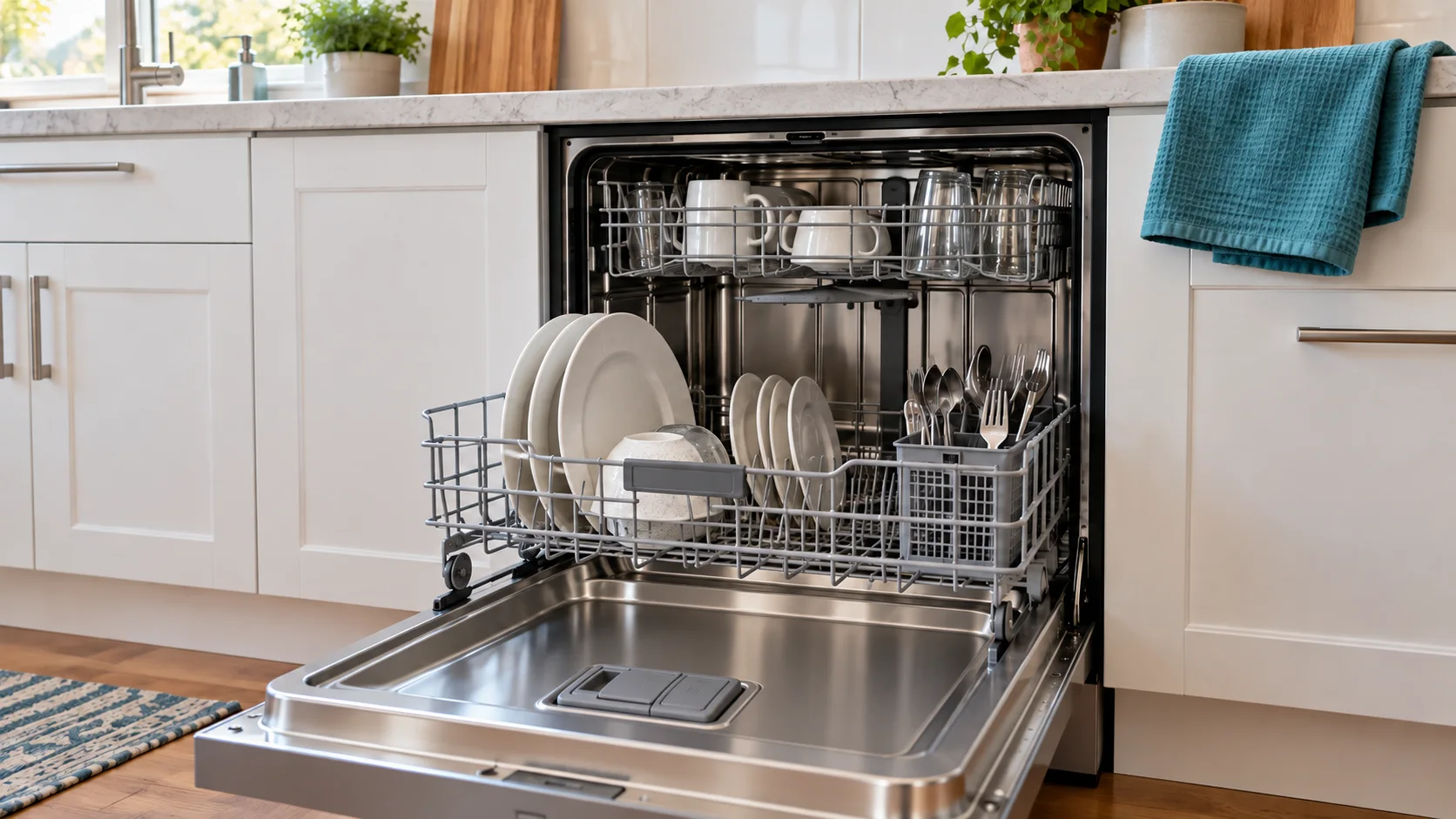
You open the dishwasher after dinner and find water sitting under the bottom rack. Before starting another wash, check whether the last cycle actually finished and whether the kitchen sink drains normally. Those two observations help separate an interrupted cycle from a blocked drain path.
Take a photo of the water level before removing any water. If the problem returns, that gives the technician something more useful than a description of a dishwasher that "sometimes doesn't work."
How much water is normal?
A little water in the recessed sump can be normal. The amount and location depend on the dishwasher design. GE explains this in its guidance on water remaining in the tub. Compare what you see with your model's manual, especially if you have never looked beneath the filter before.
A new pool covering the tub floor, dirty water near the door, or water that returns after draining deserves attention. Note whether the water is there immediately after the cycle or appears later, after someone uses the sink.
Start with the cycle and the sink
An opened door or interrupted program can leave a dishwasher partway through washing. Check the display for an unfinished cycle or error code. If there is no leak, burning smell, or electrical concern, use the model's Cancel/Drain function once, following the owner's guide. Write down whether you hear the pump and whether the water level drops.
Then check the sink. Slow drainage or water backing up there points toward a plumbing restriction that can also affect the dishwasher. Repeated wash cycles will not clear that restriction. Whirlpool's dishwasher drain guide describes how filters, hoses, and the sink connection can each interrupt drainage.
Clean the filter only as your manual allows
Switch off power at the breaker before working inside the tub and allow hot water to cool. If you cannot safely isolate power, leave the inspection to a technician. Remove the lower rack and look for a filter designed for owner cleaning. Some models use a different filtration system, so do not twist or pry a part simply because it resembles a removable filter.
- Follow the manual's removal steps and rinse the removable filter as directed.
- Use a flashlight to look for visible debris around the opening. Do not reach blindly into the sump; broken glass can be difficult to see.
- Refit and lock the filter correctly before operating the dishwasher.
A dirty filter is worth cleaning, but a clean filter does not rule out a blockage farther along the drain. Leave pump covers and internal components alone unless the owner's manual specifically identifies them as accessible for maintenance.
Did the trouble start after a new garbage disposal?
Tell the installer if the dishwasher stopped draining immediately after disposal replacement. A new disposal has a plug at its dishwasher inlet that must be removed when that connection is used. Leaving it in place blocks the dishwasher's outlet. Whirlpool includes this check in its new-installation troubleshooting instructions.
You can also look at the visible hose under the sink for a pinch or sharp bend. Avoid disconnecting it or pulling the dishwasher out for a first check. Ask the installer to verify the connection and hose routing against the installation instructions.
Water that drains, then comes back
Returning water changes what needs checking. The hose routing, air gap where fitted, and sink drain all deserve inspection. An air gap helps prevent wastewater from backing into the appliance; Whirlpool explains its role in its air-gap guide. Have the installation checked against the requirements for your model and local plumbing rules.
Record whether sink use coincides with the return of water. That detail helps the service provider decide whether to start with the appliance drain system or the household plumbing.
When to schedule service
A pump that hums without moving water may be obstructed. Silence during a drain command can have several causes, including the pump's electrical supply or control. Sound alone does not identify a failed part. Whirlpool's drain troubleshooting guidance covers these different patterns.
Stop using the machine if water escapes onto the floor, the breaker trips, or you notice burning. Do not pour chemical drain opener into the tub. If the permitted cleaning and external checks do not restore drainage, arrange service.
For dishwasher repair in Greater Cleveland, send APEX the model number, water-level photo, and any displayed code. Mention recent sink or disposal work when you request an appointment, and check your ZIP code on our service-area page.
COMMON QUESTIONS
Frequently asked questions
Is a little water below the dishwasher filter normal?
It can be. Some designs retain water in the sump. Check the expected level in your model's manual. A new pool across the tub floor or water returning after drainage needs further checking.
Can a new garbage disposal stop a dishwasher from draining?
Yes. If the dishwasher inlet plug was left in place during disposal installation, the drain path is blocked. Ask the installer to check the connection.
Should I use drain cleaner in my dishwasher?
No. Chemical drain opener can damage the appliance and create a safety hazard. Use only cleaning methods permitted in the owner's manual.
LOCAL APPLIANCE HELP
Still dealing with this appliance problem?
APEX Appliance Repair serves Greater Cleveland with practical diagnostics and clear repair recommendations.
Continue reading
Related appliance advice
Washer Shaking During the Spin Cycle? Load, Leveling, and Repair Checks
A heavy load, a loose foot, or shipping hardware can make a washer shake. Learn which observations help explain the movement and when to stop using the machine.
Read article
Commercial Ice Machine Not Making Ice? Production and Harvest Checks
Learn what can cause commercial ice machine not making ice, which checks are safe, what symptoms matter, and when professional diagnosis is the right next step.
Read article